
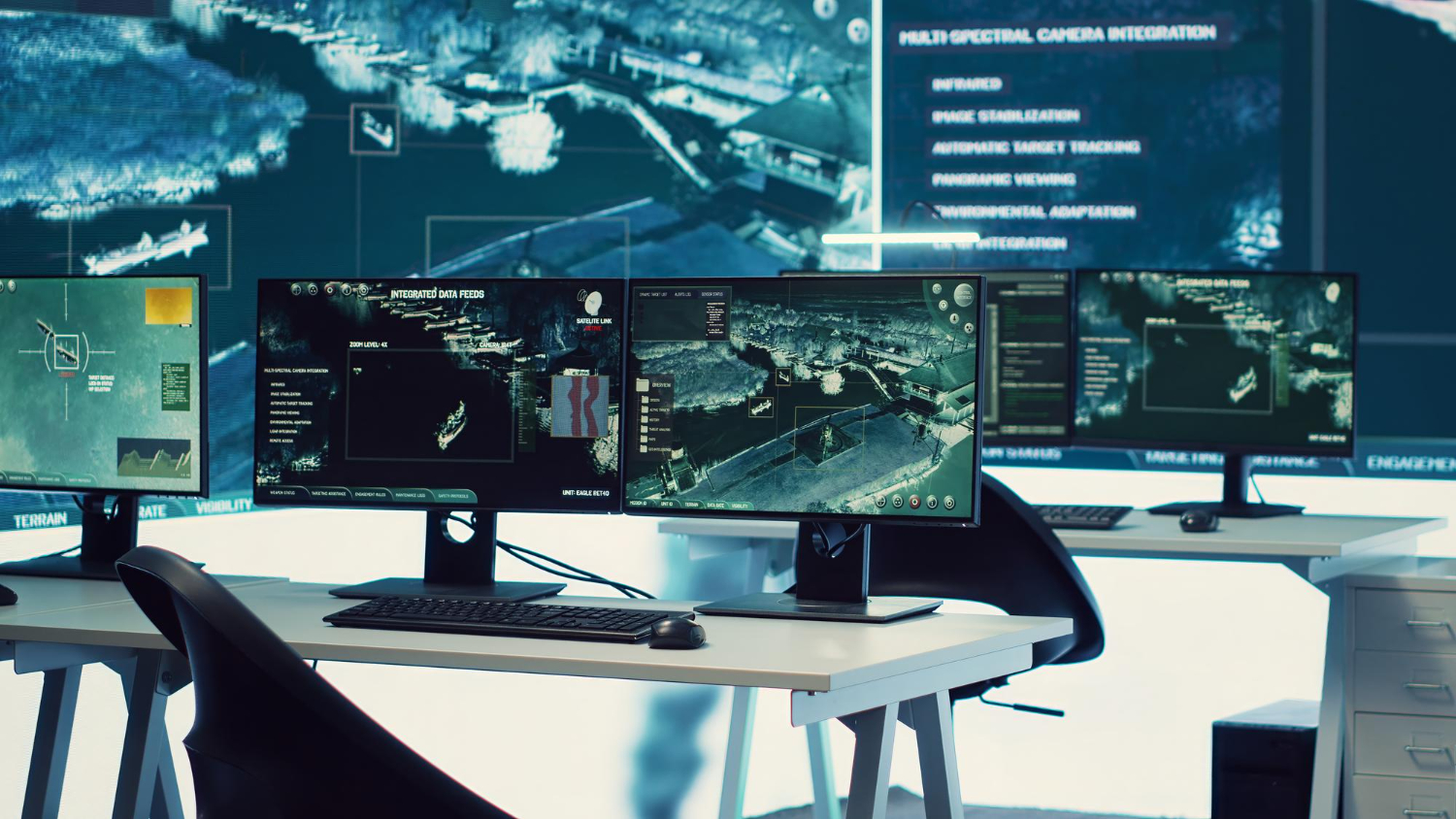
Cyber Physical Security Systems: Defending the Convergence of Digital and Physical Assets
Implementing robust cyber physical security systems has become the cornerstone of national stability and industrial resilience as we move into 2026. In an era where every water pump, power grid, and manufacturing robot connects to a network, the boundary between the digital world and physical machinery has effectively vanished. Cyber-physical systems (CPS) integrate sensing, computation, and control into physical objects and infrastructure, connecting them to the Internet and to each other. While this connectivity drives unprecedented efficiency, it also exposes critical assets to a new breed of “cyber-physical” attacks.
Malicious actors no longer just steal data; they now aim to manipulate physical processes, potentially causing equipment destruction, environmental disasters, or loss of life. Consequently, organizations must transition from traditional, siloed security models to a holistic approach that protects the entire ecosystem. This guide explores the architecture of modern CPS defense, the evolving threat landscape, and the strategic technologies required to safeguard the vital systems that power our modern world.
The Evolution of the Threat Landscape
In the past, industrial facilities relied on “air-gapping”—keeping critical machinery entirely disconnected from public networks. However, the rise of Industry 4.0 and the Industrial Internet of Things (IIoT) has made air-gapping nearly impossible. Today, data must flow from the factory floor to the cloud for real-time analysis, which creates pathways for hackers to enter.
Threat actors now use highly specialized malware designed to target Operational Technology (OT). These attacks often go undetected by standard software because they mimic legitimate commands. For instance, a hacker might slowly change the chemical balance in a water treatment plant or subtly increase the pressure in a gas pipeline. Without integrated security, the physical system will carry out these dangerous commands, believing they are valid instructions from a supervisor.
1. The Core Components of Cyber Physical Security
To build a resilient defense, organizations must understand that cyber physical security systems are built on multiple layers. It is not enough to simply install a firewall; you must secure the sensors, the communication protocols, and the physical access points.
The architecture typically follows a three-tier model:
-
The Perception Layer: This includes the physical hardware, sensors, and actuators that interact with the real world.
-
The Network Layer: The communication channels (5G, Wi-Fi, Ethernet) that transmit data between the physical and digital domains.
-
The Application Layer: The software and AI that process data and make autonomous decisions.
Securing the Perception Layer requires rigorous hardware validation. If a sensor is tampered with at the source, every decision made by the AI above it will be flawed. Therefore, physical security must be as stringent as digital encryption to prevent unauthorized manual overrides.
2. Bridging the Gap Between IT and OT
One of the greatest challenges in modern security is the cultural and technical gap between Information Technology (IT) and Operational Technology (OT). IT focuses on data confidentiality, while OT focuses on system availability and safety. When these two worlds collide, traditional Computer Security measures often prove insufficient.
Standard IT tools may inadvertently crash a sensitive industrial controller by scanning it too aggressively. Because of this, specialized security protocols are necessary to monitor industrial traffic without disrupting the physical process. Engineers must implement “Deep Packet Inspection” (DPI) for industrial protocols like Modbus or DNP3. By doing so, the system can distinguish between a normal operational command and a malicious attempt to sabotage the hardware. This convergence requires a unified security operations center (SOC) that understands both the packet and the pipe.
3. Resilience Through Proactive Defense
Modern infrastructure cannot afford to be reactive. Waiting for a system failure to detect a breach is a recipe for disaster. Instead, companies are now turning to professional Cyber Security Services to conduct continuous monitoring and vulnerability assessments. These services provide the expertise needed to manage the complexities of “Digital Twins”—virtual replicas of physical systems used to simulate attacks and test defenses.
By using Digital Twins, security teams can see how a ransomware attack might affect a power grid before it actually happens. Furthermore, AI-driven anomaly detection can identify “silent” attacks that do not trigger traditional alarms. For example, if a valve is opening 1% faster than usual every day, the AI flags this as a potential tampering attempt. Proactive defense ensures that even if a hacker gains entry, they cannot execute their ultimate goal of physical disruption.
Cyber Physical Security Matrix: Risk and Mitigation
4. The Role of Artificial Intelligence and Machine Learning
In 2026, AI is no longer optional in cyber physical security systems. The speed at which cyber-physical attacks occur is too fast for human intervention. When a malware strain attempts to shut down a cooling system in a nuclear reactor, the defense system must respond in milliseconds.
Machine Learning algorithms are trained on “normal” physical behavior. If a robotic arm in an assembly line starts moving outside its calibrated path, the AI immediately isolates that machine from the network. This “Automated Response” capability is the only way to prevent cascading failures in interconnected infrastructure. However, we must also protect the AI itself from “adversarial machine learning,” where hackers try to trick the AI into ignoring real threats.
FAQ: Frequently Asked Questions
1. What is the difference between Cybersecurity and Cyber-Physical Security?
Cybersecurity primarily protects data, networks, and software from unauthorized access. Cyber-physical security protects systems where a digital attack results in a physical change or damage to the real world, such as stopping a train or opening a dam.
2. Which industries are most at risk?
The energy, water, transportation, and healthcare sectors are the primary targets. These are often called “Critical Infrastructure” because their failure has a direct impact on national security and public safety.
3. What is a “Zero Trust” architecture in a physical context?
In a CPS environment, Zero Trust means that no device, sensor, or user is trusted by default, even if they are inside the facility. Every command sent to a machine must be authenticated and authorized through encrypted tokens.
4. How does 5G affect cyber-physical security?
5G allows for massive device connectivity and ultra-low latency. While this improves efficiency, it also increases the “attack surface,” providing hackers with millions of new entry points through unsecured IoT devices.
Checklist for Implementing CPS Defense
-
[ ] Inventory Discovery: Create a complete map of every connected physical asset and its software version.
-
[ ] Physical Access Control: Ensure server rooms and PLC cabinets are locked and monitored by biometric systems.
-
[ ] Protocol Encryption: Use secure versions of industrial protocols to prevent “man-in-the-middle” attacks.
-
[ ] Patch Management: Establish a safe schedule for updating firmware on machines that cannot be turned off.
-
[ ] Employee Training: Educate plant floor workers about social engineering and the dangers of plugging unauthorized USBs into industrial ports.
Conclusion
The protection of cyber physical security systems is the defining challenge of the digital age. As our dependence on automated infrastructure grows, so does the sophistication of those who wish to disrupt it. We can no longer treat the digital and physical worlds as separate domains; a breach in one is inevitably a breach in the other.
By integrating advanced monitoring, AI-driven response, and professional security services, we can build a future where innovation does not come at the expense of safety. The resilience of our society depends on our ability to shield our machinery from digital malice. We must remain vigilant, continue to innovate our defensive postures, and ensure that our most critical systems are “secure by design.” The bridge between the byte and the atom must be guarded with unwavering precision.